
US Science Museums That Make a Great Family Day Out
Find a science museum that fits your family by comparing hands-on exhibits, age suitability, accessibility, and the practical details that make a day out easier.
· 10 min read
If you’re searching for top-rated family-friendly attractions, science museums are worth considering, especially when their hands-on exhibits match your children’s ages and interests. The best choice for your family is not necessarily the one with the highest rating. It is the one where kids can explore at their own pace, adults can manage the practical details, and everyone has room to take a break.
This guide focuses on how to compare science museums across the United States rather than naming a national winner. Use it to look beyond promotional photos and review scores, assess what your children will actually do, and decide whether a museum deserves a place in your day-out plans.
What makes a science museum a great family attraction?
A strong family day out starts with a good match between the attraction and the people visiting. A child who loves building might spend ages adjusting a structure, while another may be happiest watching an experiment or examining something closely. Neither needs the biggest museum to have a rewarding visit.
Look for a balance of active exploration, understandable explanations, and practical support. An impressive exhibit list matters less if the activities require skills your youngest has not developed, or if the visit leaves no easy opportunity for lunch or a quiet pause.
- Participation: What can children build, test, compare, or change?
- Age fit: Can each child take part meaningfully, rather than simply follow along?
- Choice: Are there different ways to explore, including alternatives to screens?
- Comfort: Do the available amenities meet your family’s needs?
- Flexibility: Can you enjoy a shorter visit without feeling that you missed everything?
Use ratings as a starting point, not a verdict. A glowing review from an adult science enthusiast might tell you very little about visiting with a preschooler, a stroller, and a child who dislikes loud noises.
Look closely at what hands-on really means
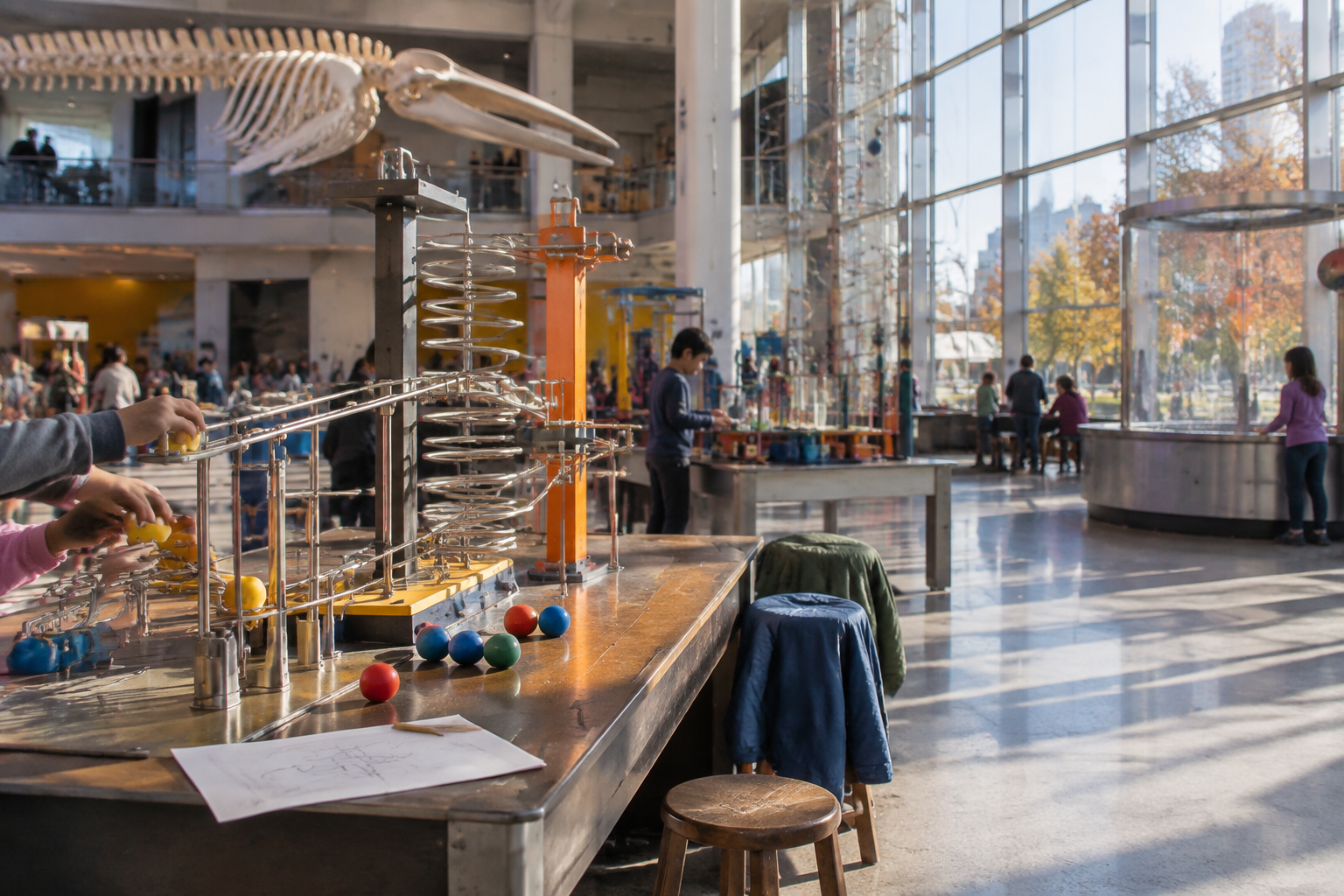
The phrase “hands-on” is useful only when you know what children can actually do. Pressing a button to start a fixed sequence is different from changing a variable and seeing a new result. Both might be enjoyable, but they offer different levels of involvement.
When reviewing exhibit descriptions, look for activities with more than one possible outcome. Building and rebuilding, directing a flow, comparing materials, or adjusting a design can give children reasons to stay engaged. Treat these as features to look for, not facilities to assume a museum has.
Photos can help you ask better questions. Is there space for an adult and child to work together? Does an activity appear to accommodate several visitors, or depend on one person finishing before the next can start? Can a younger sibling participate without taking over an older child’s project?
A useful test is whether your child could ask, “What happens if I change this?” If the exhibit description suggests a way to investigate that question, it may offer more depth than its appearance alone suggests.
Match exhibits to your children’s ages
Age recommendations are a helpful filter, but think about reading ability, patience, mobility, and interests too. Two children of the same age may want very different experiences. Check the official exhibit pages for intended audiences and any participation requirements.
For babies and toddlers, prioritize the details that make accompanying the family manageable. Investigate stroller access, changing facilities, feeding arrangements, and any designated early-childhood space. Do not assume that a museum described as family-friendly provides all of these.
Preschoolers may enjoy activities with an immediate, visible response and little dependence on written instructions. Look for opportunities to repeat an action, make a simple choice, and notice what changes. Check whether any young-child area has boundaries or entry rules relevant to older siblings.
For elementary-age children, consider activities that move from trying something to explaining it. A challenge with a clear goal can provide a starting point, while options to adjust or repeat it can sustain interest.
For tweens and teens, look beyond the general promise of interactive exhibits. Seek descriptions that indicate meaningful problem-solving, real-world questions, or enough detail to support deeper exploration. Ask your older child to identify something they genuinely want to see before you book.
Plan for siblings with different interests
A museum can look ideal for each child separately and still be awkward for the family together. Before choosing, identify one priority for each child and check whether those experiences can fit comfortably into the same visit.
A building activity might appeal to siblings at different levels, with one experimenting freely and another working toward a specific result. By contrast, an experience with strict participation requirements may leave someone waiting. Read those requirements rather than relying on a broad age label.
If two adults are attending, splitting up briefly might help, provided the layout and supervision rules allow it. With one adult, prioritize experiences everyone can access together. A workable shared visit is more valuable than a long list of attractions that pull your family in opposite directions.
Check amenities as carefully as exhibits
Practical amenities deserve a place in your comparison from the beginning. They are not minor extras when you are carrying supplies, managing bathroom breaks, or trying to give a tired child somewhere to sit.
- Food: Check whether food is sold, whether outside food is permitted, and where eating is allowed.
- Bathrooms: Look for information about changing facilities and family or companion restrooms.
- Strollers: Confirm access rules, storage options, and any exhibit restrictions.
- Belongings: Find out whether storage is available and whether bags are restricted.
- Breaks: Check maps or visitor information for seating and places to pause.
- Reentry: Verify whether you can leave and return if that affects your meal or rest plans.
If a detail is important and the website does not answer it, contact the museum directly. It is better to clarify one essential facility before booking than to discover that your plan depends on something unavailable.
Evaluate accessibility and sensory fit
Accessibility is more specific than whether you can enter the building. Consider the full visit, from arrival and ticket collection to reaching exhibits, using bathrooms, and participating in activities.
For mobility needs, check published information about step-free routes, elevators, accessible restrooms, and exhibit access. If a child needs to use an activity while seated, ask about that particular experience. A general accessibility statement may not answer every practical question.
For sensory needs, look for official details about sound, lighting, quiet spaces, and available supports. Ask whether any planned demonstration involves sudden noises or other effects relevant to your child. Do not assume that an indoor educational setting will feel calm throughout.
Captions, audio support, tactile elements, and clear instructions may also matter to your family. Verify the provisions you need directly. If sensory-friendly sessions or other access programs are listed, check their current arrangements rather than assuming they apply to every visit.
Decide whether scheduled experiences are worth adding
If a museum advertises demonstrations, workshops, screenings, or other scheduled experiences, consider how each would shape the day. A shared activity can provide a welcome focus, but it can also interrupt a child who is happily absorbed in an exhibit.
Before adding anything, check the official description for audience suitability, participation requirements, duration, booking rules, and whether it is included with admission. Confirm the schedule for your intended visit, since a general program page is not a guarantee that an activity will be available.
Choose extras because they suit your family, not because they sound essential to a complete visit. One well-chosen experience may be easier to enjoy than a sequence of commitments that leaves everyone watching the clock.
Compare the full cost, not just admission
A useful budget includes every expense you expect to incur. Alongside admission, investigate transportation or parking, food, optional experiences, and any other charges relevant to your plans. Use the museum’s official ticket information for current prices and terms.
Read what each ticket includes before comparing museums. Check whether the experiences your children most want require separate reservations or additional payment. Also review change and cancellation policies, particularly if you are booking as part of a trip.
If you have a membership elsewhere, verify any reciprocal admission arrangements with the museum you intend to visit. Do not assume that membership automatically covers every family member or every experience.
Value is about what your family will comfortably enjoy. A smaller visit with several satisfying activities can be a better use of your budget than a more ambitious outing dominated by travel, waiting, or unsuitable exhibits.
Use reviews without letting ratings make the decision
Once you understand the official offering, reviews can help you identify questions to investigate. Look for accounts from families with children of similar ages or with needs comparable to yours. Specific observations are more useful than a score on its own.
Pay attention to repeated comments about participation, navigation, noise, seating, and how siblings managed the visit. Separate preferences from practical concerns. One reviewer’s complaint that children kept repeating an activity could describe exactly the experience your child would love.
Check when a review was written and whether it refers to a temporary experience. Use the official website to verify current offerings, access arrangements, tickets, and visitor rules. Reviews can inform your expectations, but they should not be your final source for logistics.
Choose a realistic pace for your day out
A museum visit does not have to become a mission to cover every gallery. Choose a few priorities and leave room for your children to surprise you. The exhibit they return to may be more rewarding than the one you expected to be the highlight.
Build your plan around your family’s normal needs, including meals, rest, and travel tolerance. Check current opening hours and any scheduled bookings on the official site before deciding how much you can comfortably fit in.
While exploring, simple prompts can keep the focus on discovery: “What did you notice?” or “What would you try next?” You do not need to explain everything. Let children test their own ideas, and allow an unsuccessful attempt to become part of the activity.
Leave space to finish well. A final return to a favorite exhibit may be a better ending than squeezing in another section when everyone is ready to go.
A quick comparison before you book
For each museum on your shortlist, write down the following details. An unanswered question is a reason to investigate, not an automatic reason to rule somewhere out.
- One genuinely appealing experience for each child.
- The extent of hands-on participation, including any restrictions.
- The food, bathroom, and break arrangements you will need.
- Accessibility provisions relevant to your family.
- The complete expected cost and any required reservations.
- The travel involved and whether a shorter visit would still feel worthwhile.
The strongest choice is the one that meets your essential needs and gives everyone something to anticipate. That is a more useful definition of a top family attraction than a national ranking alone.
Frequently asked questions
What is the best science museum in the US for families?
There is no single best choice for every family. Compare museums by hands-on participation, age suitability, accessibility, amenities, and total cost. Without verified venue information, a named national ranking would not be a reliable recommendation.
Are science museums suitable for toddlers?
They may be, but check the specific museum’s early-childhood offering and visitor facilities. Look for activities suitable for your toddler, alongside changing arrangements, stroller rules, and somewhere appropriate to take a break.
How long should we plan to spend at a science museum?
Base your plan on your children’s stamina, your priorities, and any reservations rather than trying to see everything. Confirm current hours with the museum and allow for food and rest. A shorter, enjoyable visit is a perfectly good outcome.
Should we book tickets in advance?
Check the museum’s official ticket page for booking requirements, entry arrangements, and availability. Review any separate reservations for optional experiences and read the change policy before committing.
How can we tell whether a museum will interest older kids?
Read exhibit descriptions together and look for challenges or subjects they want to investigate. Opportunities to make choices, test ideas, and explore explanations are more informative than a general label such as “fun for all ages.”
Can we bring our own lunch?
That depends on the museum’s current food policy. Check whether outside food is allowed, where it may be eaten, and whether reentry is permitted if you plan to leave for lunch. Confirm these details before packing or making reservations elsewhere.