
Buford Corn Maze: A Georgia Family’s Before-You-Go Guide
Planning a Buford Corn Maze outing? Here’s what to confirm before leaving, how to approach maze paths, and how to pace the day for younger and older kids.
· 10 min read
Planning a Buford Corn Maze visit with kids? Start by checking the venue’s official website for your intended date, current tickets, operating hours, and available activities, then plan around your youngest child’s walking stamina. This guide covers what to verify before leaving, practical maze navigation, terrain questions, and ways to make a corn maze outing work for different ages.
A note on verified details: No current venue information was supplied for this guide, so we cannot confirm Buford Corn Maze’s operating schedule, admission prices, attractions, or accessibility. The advice below is general family planning guidance, not a description of confirmed facilities or activities at this venue.
Check operating details before you leave
Make your first planning stop the official venue website, rather than an old review or a search listing. Check that the information applies to the date you want to visit. A previous season’s page might help you form questions, but it should not be the basis for buying tickets or setting a departure time.
Before committing to the drive, look for answers to these questions:
- Is the venue operating on your chosen date? Confirm the calendar, opening time, closing time, and any separate last-entry cutoff.
- What does admission include? Check whether maze entry and any other advertised activities share one ticket or require separate purchases.
- Does everyone need a ticket? Read the current age rules and any accompanying-adult requirements.
- Do you need to book ahead? Check for timed admission, capacity restrictions, or date-specific tickets.
- What happens if conditions change? Read weather, cancellation, refund, and rescheduling policies.
- Where should you arrive? Confirm the visitor entrance, parking instructions, and any parking charge.
If you cannot find a clear answer, contact the venue before purchasing. This matters especially if your outing depends on a particular activity, a mobility accommodation, or a narrow window between naps and dinner.
Build a budget from the current ticket information
There are no verified ticket prices available for this guide. Instead of working from an estimated admission figure, total your family’s visit using the current official ticket page. Include every person attending and any fees shown before checkout.
Then check possible extras rather than assuming they are included. Questions worth asking include whether parking costs extra, whether advertised activities have separate charges, and whether food or other purchases fit your budget. These are planning checks, not confirmed charges at Buford Corn Maze.
Read the outside-food and drink policy before packing a picnic. Likewise, check payment information if you intend to rely on a particular payment method. A simple family spending limit helps older kids decide whether an optional purchase is worth it without turning every stop into a negotiation.
Choose the right pace for your family
Think about the outing in terms of energy, not how much you can squeeze in. A child who enjoys a short neighborhood walk may feel differently when the route has unfamiliar turns and no obvious endpoint. Leave enough flexibility to stop while everyone is still having fun.
For younger children, consider a visit that fits around their usual meal and sleep routine. For older kids, allow room for a navigation challenge without promising that they can explore independently. Venue supervision rules should guide that decision.
Do not assume all advertised activities run throughout every operating session. If a particular experience is the main reason you are going, confirm its availability for your intended visit. Also check whether any evening offering differs from the daytime experience in content, lighting, or age guidance.
A useful family agreement is simple: everyone gets a say in the plan, but nobody has to become exhausted or frightened to make the outing count.
What to ask about terrain and accessibility
This guide cannot confirm the surface, slope, path width, or accessibility of Buford Corn Maze. For planning purposes, treat an outdoor maze as a place where terrain needs checking rather than assuming a smooth walking route.
Ask specifically about the paths inside the maze, not just the entrance area. Whether a stroller, wheelchair, or other mobility device can reach the ticket area does not answer whether it can travel through the whole experience comfortably.
Useful questions for the venue include:
- What are the maze paths made of, and are they level?
- Are there narrow turns, steep sections, ruts, or other obstacles?
- How do current ground conditions affect access?
- Are strollers and wagons permitted inside the maze?
- Is there an accessible route, and which areas does it reach?
- Where are accessible restrooms, seating, and rest areas, if provided?
- What help is available if someone needs to leave the maze early?
Describe your actual needs when asking. For example, explain whether you need step-free access, a firm rolling surface, frequent seated breaks, or space for a particular mobility device. Specific questions are more useful than a general request to know whether a place is family-friendly.
Dress and pack for an outdoor maze
Check the local weather forecast shortly before leaving and choose clothing for the conditions. Closed-toe shoes with secure fastening and useful grip are a practical choice for outdoor walking. Avoid making a long maze walk the first test of a child’s brand-new shoes.
Layers give you options if the temperature changes during the outing. If the forecast suggests wet conditions, check both the venue’s operating status and its latest ground-condition advice. An open venue does not necessarily mean every surface will suit every visitor.
Keep your bag manageable. Depending on the forecast, family needs, and venue rules, consider:
- Water and any permitted snacks.
- Sun protection and appropriate outer layers.
- Necessary medication and personal care supplies.
- A charged phone and your booking confirmation, if applicable.
- Wipes and a spare outfit for a younger child.
- A change of footwear for the journey home if conditions warrant it.
If you use a child carrier, follow its manufacturer’s limits and consider your own comfort on the expected terrain. A carrier is not an automatic solution to an inaccessible or difficult route.
Navigate the maze without turning it into a test
Before entering, read the posted instructions and ask how visitors should get help or leave early. If a map is provided, take a moment to understand its symbols and any designated exits. Do not assume a shortcut or midway exit exists.
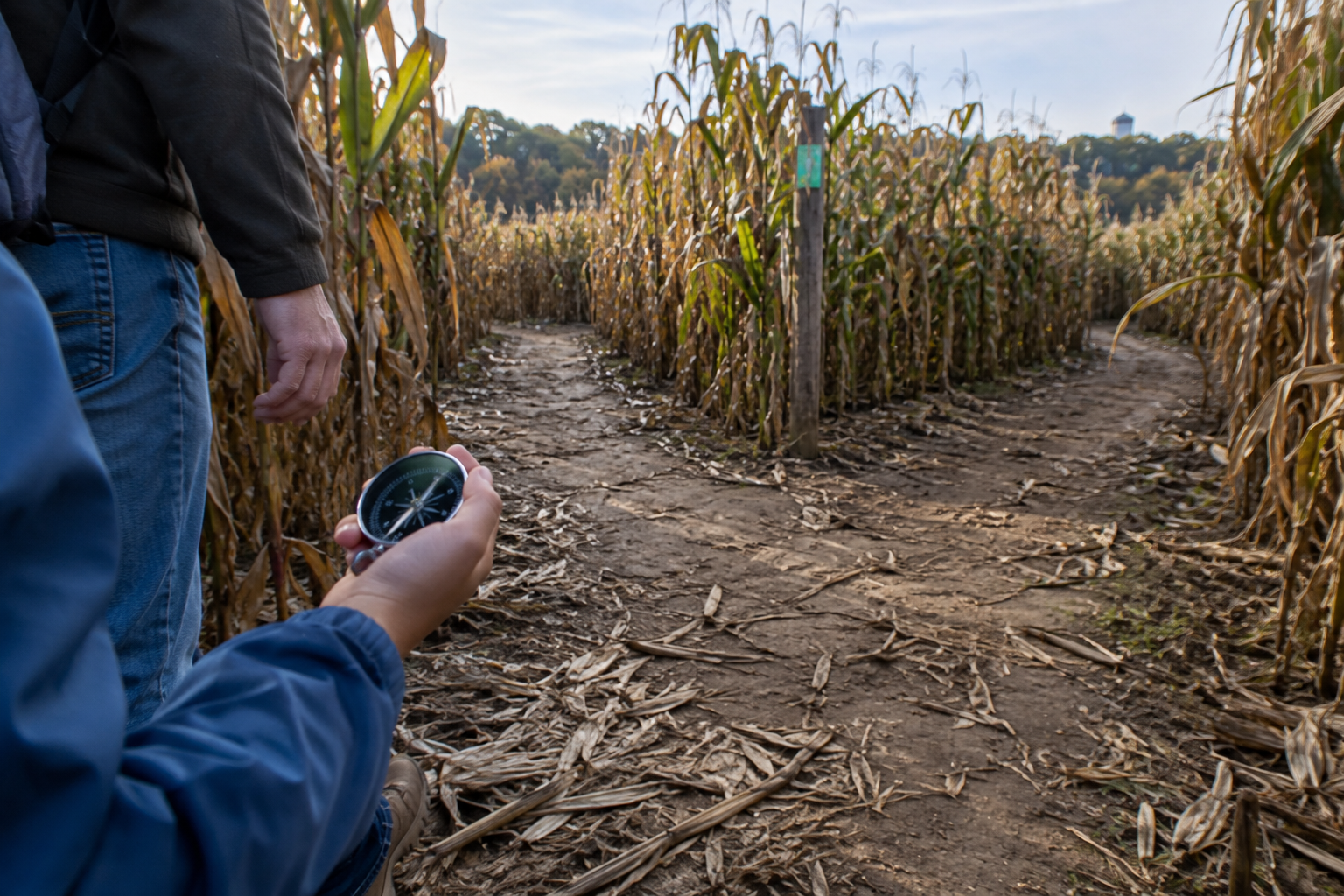
Let one person make the navigation decisions at a time. Older children can rotate the role of navigator, while an adult keeps responsibility for supervision. At each junction, pause, look at the available information, and agree on the next direction before moving.
A few habits can keep the challenge enjoyable:
- Use marked clues or landmarks. If the maze provides numbered points or signs, use them to track progress.
- Remember recent choices. Talking through the last few turns can help you recognize a repeated section.
- Treat wrong turns as information. Backtracking is part of the puzzle, not a reason to blame the navigator.
- Stay on designated paths. Do not cut through plants or create your own exit.
- Pause before frustration builds. A brief reset can help you decide whether to continue or seek assistance.
A phone can store a photo of a posted map if photography is allowed, but do not depend on phone reception or GPS to solve the route. Follow the venue’s instructions rather than an internet shortcut that may not apply to the maze layout.
Make the outing work for younger children
For toddlers, preschoolers, and children who dislike uncertainty, make togetherness the goal rather than completion. You might invite them to choose between two turns or spot the next permitted marker, while an adult handles the bigger navigation decisions.
Explain the experience before entering: you will walk along paths, some turns may lead back the way you came, and adults will stay with them. Avoid promising that it will be quick or easy when the route and walking time have not been confirmed.
If other activities are advertised for your visit, look for options that match your child’s abilities. Check supervision rules, physical demands, age or height restrictions, and whether they can stop easily. A familiar-sounding activity name is not enough to establish suitability.
Take care of bathroom and snack needs before the maze, using whatever facilities and food options are confirmed. If your child becomes tired or distressed, use the venue’s designated assistance or exit process. Finishing the route is optional; keeping your child comfortable matters more.
Give older kids a challenge, not unlimited freedom
Older children may enjoy having a genuine job. Let them read an available map, explain why they favor a route, or keep track of the turns the group has tried. You can also make the objective cooperative: reach the end with everyone contributing rather than racing each other.
Age alone does not establish readiness to split up. Consider the child’s judgment, the setting, communication options, and the venue’s supervision requirements. Do not send children into separate paths simply to see which route works.
If the official listings include physically demanding activities, check the restrictions before presenting them as part of the plan. If they include a scary or evening experience, read its specific content and age guidance. Neither type of offering is confirmed here.
For mixed-age siblings, give the older child a navigation role without making them responsible for a younger sibling’s safety or mood. Adults should remain responsible for supervision, breaks, and decisions about leaving.
Agree on a family safety plan
Before entering, tell children to stay with their accompanying adult and stop at junctions rather than running ahead. Explain how to identify venue staff and ask staff what a child should do if separated. Use that guidance to agree on a clear plan.
Keep essential contact information available in an age-appropriate way. Do not rely on a young child remembering a phone number under stress, and do not assume everyone’s phone will have service.
Ask about assistance before you need it, particularly if someone in your group has a medical, sensory, or mobility need. Follow posted rules and staff directions throughout the visit. If someone is struggling, seek help rather than cutting through the maze boundary.
Use a flexible plan on arrival
Once you arrive, check for operational updates and locate any confirmed restrooms and visitor assistance point. Reassess the plan using actual conditions, including the ground underfoot and your children’s energy after the journey.
If the maze is your main priority and everyone is comfortable, consider doing it while the group is fresh. Afterward, take a break before deciding whether to try another available activity. You do not need to turn every advertised option into a family obligation.
Before leaving, check that everyone has their belongings and is comfortable for the ride home. The best version of the outing may be one enjoyable maze attempt, not a completed checklist.
Frequently asked questions
What are Buford Corn Maze’s opening hours?
Current opening hours were not supplied for this guide. Check the official website for your exact visit date, including last admission and any activity-specific operating times. Confirm weather-related updates before departing.
How much are Buford Corn Maze tickets?
No current ticket prices are verified here. Use the official ticket information to check admission by age, included activities, booking fees, and any separately priced options before calculating your family total.
Is Buford Corn Maze suitable for toddlers?
Suitability depends on the current experience, terrain, rules, and your child’s comfort with walking and unfamiliar routes. Ask about route demands and early-exit arrangements. Plan around breaks rather than expecting a toddler to complete the maze.
Can you take a stroller or wheelchair into the maze?
Stroller policies and wheelchair access are not confirmed in this guide. Contact the venue about permitted equipment, path surfaces, widths, slopes, and current conditions. Ask about the maze itself, not only access to the entrance.
How long does the maze take?
No verified completion time is available. Ask the venue for current guidance, then allow flexibility for wrong turns, children’s pace, and breaks. Avoid placing a time-sensitive commitment immediately after your planned maze visit.
Is there a haunted experience or other kids’ activities?
No specific attractions beyond the subject of this guide have been verified. Check the current official listings before promising an activity to your children. For any scary experience, review its content, age guidance, and supervision requirements separately.
What should we do if rain is forecast?
Check the forecast alongside official operating updates and ticket policies. Ask about ground conditions if footing or mobility is a concern. Do not assume either closure or normal operation based on the forecast alone.