
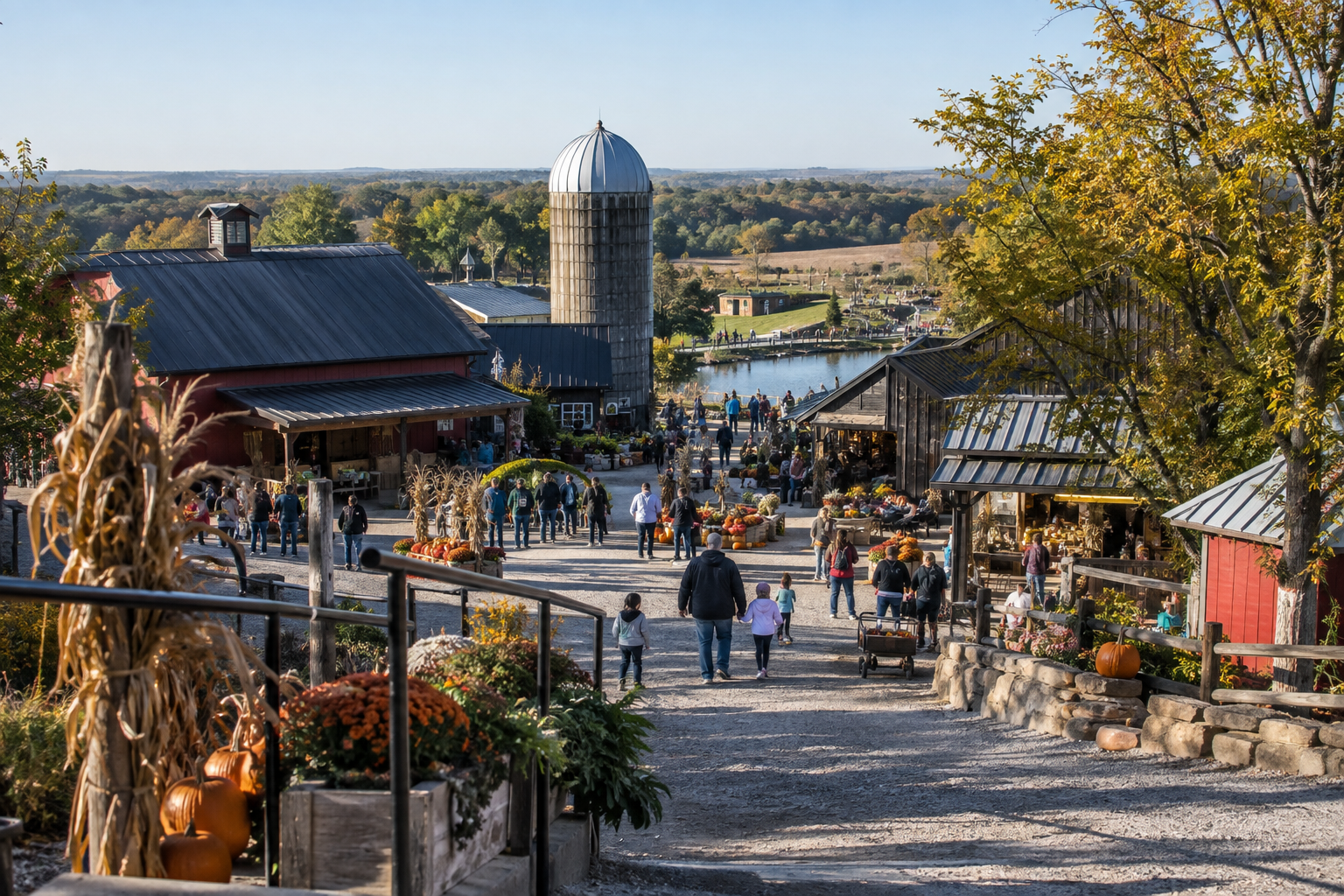
Vala’s Pumpkin Patch With Kids: Planning a Nebraska Farm Day
Plan a manageable family visit to Vala’s Pumpkin Patch with a short attraction wish list, well-timed food stops, and room for breaks.
· 7 min read
Planning a visit to Vala’s Pumpkin Patch with kids? Start with a short list of priorities, build food and rest into the plan, and treat everything else as a bonus. For a Nebraska farm day, that approach gives your family a useful starting point without turning the outing into a race to do everything.
This guide focuses on how to organize your visit, not a fixed attraction itinerary. Before heading out, check Vala’s official website for current operating dates, hours, admission details, available attractions, food options, and visitor policies. Let those details shape a plan that fits your children’s ages, energy, and interests.
Choose a few priorities, not a full checklist
Before discussing every possible activity, ask each child one question: “What would make this a really good day for you?” Use the current attraction information on the official website to keep their answers grounded in what is actually available.
Then narrow the family list to two or three shared priorities. These are the experiences you will make a reasonable effort to reach, not promises that override weather, closures, long waits, or a tired toddler. Keep a separate bonus list for anything you might enjoy if the day is going well.
- First choice: The activity your family most wants to try.
- Second choice: Something with a different pace or appeal.
- Bonus choice: An optional extra that is easy to skip.
For siblings with different interests, give each child a turn choosing rather than trying to make every stop equally exciting for everyone. A simple “your pick, then your sister’s pick” can be easier to understand than a complicated schedule.
Check the practical details before leaving home
A little preparation can prevent the most frustrating surprises. Review the official website shortly before your visit, even if someone in your group has been before. Use current information rather than an old social post or another family’s past experience.
- Confirm your intended visit date, operating hours, and any ticket conditions.
- Check whether your priority attractions have age, height, supervision, or other participation requirements.
- Review weather-related updates and relevant cancellation or ticket policies.
- Look for information about parking, strollers, accessibility, and restrooms.
- Check policies on outside food, drinks, bags, and leaving and returning.
If a detail affects whether your family can comfortably visit, contact the venue when the website does not answer it. That is especially important for mobility needs, food allergies, or other requirements that cannot be left to chance.
Save tickets and essential information on your phone before leaving. Have another adult keep a copy if possible, so one low battery does not become everyone’s problem.
Build the day around a few anchors
You do not need a minute-by-minute itinerary. Instead, give the outing a simple shape: get oriented, try a priority activity, eat and rest, then reassess. This keeps the day flexible while avoiding repeated debates about what comes next.
Once you arrive, take a moment to locate essential facilities and review any available map or visitor information. Choose the first activity based on both interest and practicality. If your top choice involves an uncomfortable wait, try the backup rather than spending everyone’s best energy standing still.
A useful family rhythm looks like this:
- Settle in: Handle bathroom needs and agree on the first destination.
- Enjoy a priority: Focus on one shared experience without rushing ahead mentally.
- Pause: Eat, drink, and take a genuine break.
- Choose again: Attempt the next priority only if the group is ready.
Avoid crossing back and forth just to follow the original order. If current visitor information shows that two choices are near each other, group them together. The plan should save effort, not create more walking.
Make food a planned stop
Food works best as part of the day rather than an emergency response to crankiness. Review the current food information before visiting Vala’s Pumpkin Patch, then decide whether you are planning around a meal, a snack, or both. Do not promise a particular item until you have confirmed it is available.
Try to pause before your children become urgently hungry. That might mean stopping after the first priority activity instead of squeezing in another turn. If possible, let everyone finish eating without simultaneously negotiating the next three attractions.
Set treat expectations early, too. You might choose one treat per child or one shared family purchase, depending on your budget. Explaining that limit at home is usually simpler than introducing it when everyone has already spotted something they want.
For allergies or dietary restrictions, check directly with the venue about ingredients and preparation practices. Confirm outside-food rules before relying on packed snacks, and plan drinks around the current policies and your family’s needs.
Take breaks before anyone hits a wall
A break is not a failed part of the outing. It is what can make the next activity enjoyable. Watch for early signs that your child needs a pause: dragging feet, suddenly rejecting every suggestion, becoming unusually clingy, or arguing over small things.
Make the break different from the activity you just finished. Stop moving, reduce the number of choices, and give children time without another task. Standing in a line may offer a pause from walking, but it does not necessarily feel restful to a young child.
For children who are sensitive to noise, crowds, or unfamiliar settings, keep the plan especially flexible. Ask the venue about relevant accommodations or quieter options rather than assuming a suitable space will be available. Familiar comfort items may help, provided they are practical to carry and allowed.
Decide ahead of time what will trigger an early departure. Persistent distress, exhaustion, or an unmet physical need is a better reason to leave than an unfinished checklist is a reason to stay.
Adapt the plan to your children’s ages
With toddlers and preschoolers, keep transitions simple. Offer two choices rather than reading out the entire bonus list. Protect normal meal and rest routines where you can, and allow time for small discoveries instead of continually redirecting attention toward the next big plan.
With school-age kids, let them help choose the priorities and understand the trade-offs. “We can wait for this or try our backup” gives them a useful role without handing over every decision.
With a mixed-age group, consider splitting briefly only if you have enough responsible adults and each child has appropriate supervision. Agree on a clear meeting place and check-in plan first. Do not assume older siblings should miss their own choices to entertain younger children.
Whatever their ages, discuss what to do if someone becomes separated. Identify how to seek staff help using the venue’s current guidance, and give children an age-appropriate way to access a caregiver’s contact information.
Pack and budget for a comfortable visit
Check the forecast and choose clothing for the expected conditions. Comfortable closed-toe shoes, suitable layers, sun protection, and a change of clothes for younger children are practical considerations for an outdoor family outing. Keep the load manageable, since everything you bring needs carrying or storing.
If you plan to use a stroller or need a step-free route, verify the relevant policies and terrain information first. Do not assume every route or experience will suit every mobility device.
Build your budget from current official prices rather than estimates from older reviews. Separate admission from food, shopping, and any optional experiences that may cost extra. Verify what admission includes before deciding which activities belong on your priority list.
A small discretionary limit can reduce repeated negotiations. Tell children whether there is room for a purchase, and avoid presenting every optional extra as part of the promised day.
Leave while the day still feels good
After your main priorities and a proper break, ask whether another activity will genuinely improve the outing. There is no requirement to keep going just because something remains on the list.
Give children a clear last-activity warning rather than announcing departure without notice. Keep that final choice realistic, and avoid adding another stop after you have said it is time to go.
On the way home, ask everyone for a favorite moment. That helps frame the visit around what your family enjoyed, not what you skipped.
Frequently asked questions
How much time should we plan for Vala’s Pumpkin Patch?
Choose a visit window based on your children’s stamina, meal and nap routines, and your short priority list. Check current operating hours on the official website, but do not treat the full opening window as a target.
What should we do first?
After getting oriented and handling bathroom needs, start with a high-priority activity that suits the group’s energy. Have a backup ready if availability, participation requirements, or the wait makes your first choice impractical.
Can we bring food or a stroller?
Check Vala’s current visitor policies before packing either. For specific dietary, accessibility, or equipment questions, contact the venue rather than relying on assumptions or past visits.
How can we keep spending under control?
Confirm current admission prices and inclusions, then set separate limits for food and optional purchases. Share those limits with children before arriving, and make clear that bonus activities or treats are not guaranteed.
Do we need to do everything to have a good visit?
No. A few experiences everyone enjoys, with time to eat and recover between them, make a more manageable family day than pushing through a long checklist.