
Beyond the Strip: Las Vegas Family Outings Built Around Kids
Plan a kid-first Las Vegas day away from casino resorts, with ideas for standalone museums, parks, and nearby nature outings, plus advice on ages, driving, and downtime.
· 7 min read
The best things to do in Vegas with kids do not have to revolve around casino resorts. Build your day around a standalone museum, a park with room to play, or a nearby nature outing, choosing the experience that fits your children’s ages and energy. Away from the Strip, the goal is simple: less time navigating adult attractions and more time doing something your kids actually enjoy.
This guide focuses on how to choose those outings rather than listing unverified venues. Before committing, use each destination’s official website to confirm current admission, hours, facilities, and any reservation requirements. Then check the journey from your actual starting point, not just its distance from central Las Vegas.
Start with the kind of day your kids need
Before searching for attractions, decide what would make today work. Does your preschooler need free play? Is your elementary-age child asking questions about everything? Would your teenager rather take photographs outdoors than follow a packed sightseeing schedule?
Choose one main outing, then leave room for food and a flexible second stop. A museum followed by a park can be a better fit than two ticketed experiences with fixed arrival times. Equally, a nature outing can be the whole day’s plan, without an indoor attraction squeezed in afterward.
- For hands-on kids: Look for an indoor destination with clearly described interactive activities.
- For kids who need to move: Prioritize a park and verify its play facilities before leaving.
- For curious older children: Choose a museum topic they already care about.
- For a quieter reset: Look for a manageable outdoor route or viewpoint, subject to conditions.
Choose a standalone museum by activity, not just subject
A museum’s topic is only half the decision. The other half is what your child will actually do there. Read the official exhibit descriptions for clues: touching, building, experimenting, watching, or reading. A fascinating subject can still be a poor fit if the visit requires more patience than your child has that day.
For toddlers and preschoolers, look for explicit information about early-learning spaces, stroller policies, and opportunities to take breaks. Do not assume that a venue described as family-friendly has a separate area for young children.
Elementary-age kids may enjoy having a small mission, such as finding three surprising facts or choosing one exhibit to explain to the adults. For tweens and teens, offer a shortlist and let them pick the subject. Having a say can make the visit feel like their outing rather than an obligation.
Before booking, check whether general admission covers the experiences you want. Also confirm reentry rules, food policies, accessibility, and any timed-entry requirements. These details help you decide whether lunch belongs before, during, or after the visit.
Make a park the main event
A park does not have to be a filler between bigger attractions. For a child who has spent the morning sitting in a car or following adults, an unhurried play stop may be exactly the right outing.
Choose by facilities rather than by a promising photograph. Check the official park page for the features that matter to your family, such as playground equipment, restrooms, picnic areas, accessible paths, or posted operating information for seasonal amenities. Do not count on a water-play feature being available without confirming it.
Age suitability matters here, too. With a toddler, think about how easily you can supervise and whether the listed equipment suits younger children. With older kids, ask whether they would prefer open space, a walking route, or a place to bring an activity permitted by park rules.
Bring water and sun protection, and check the weather before making outdoor play the centerpiece of the day. If conditions are uncomfortable or unsafe, switch plans rather than trying to get through the outing. A flexible park visit should make the day easier, not become another deadline.
Keep nearby nature outings manageable
A nature outing away from casino resorts can give the day a completely different focus. The trick is choosing the experience around your least confident walker, not the adult with the biggest sightseeing ambitions.
Start with the official land manager’s information. Look for current access notices, trail descriptions, elevation changes, surface conditions, restroom locations, and any permits or reservations. A route described as short is not automatically easy, stroller-friendly, or suitable in the day’s weather.
For younger children, consider whether a brief walk or an accessible viewpoint would deliver the experience you want without a long commitment. For older children, build interest around observation: rock shapes, landscape photography, or questions about how the scenery formed. Avoid promising wildlife sightings.
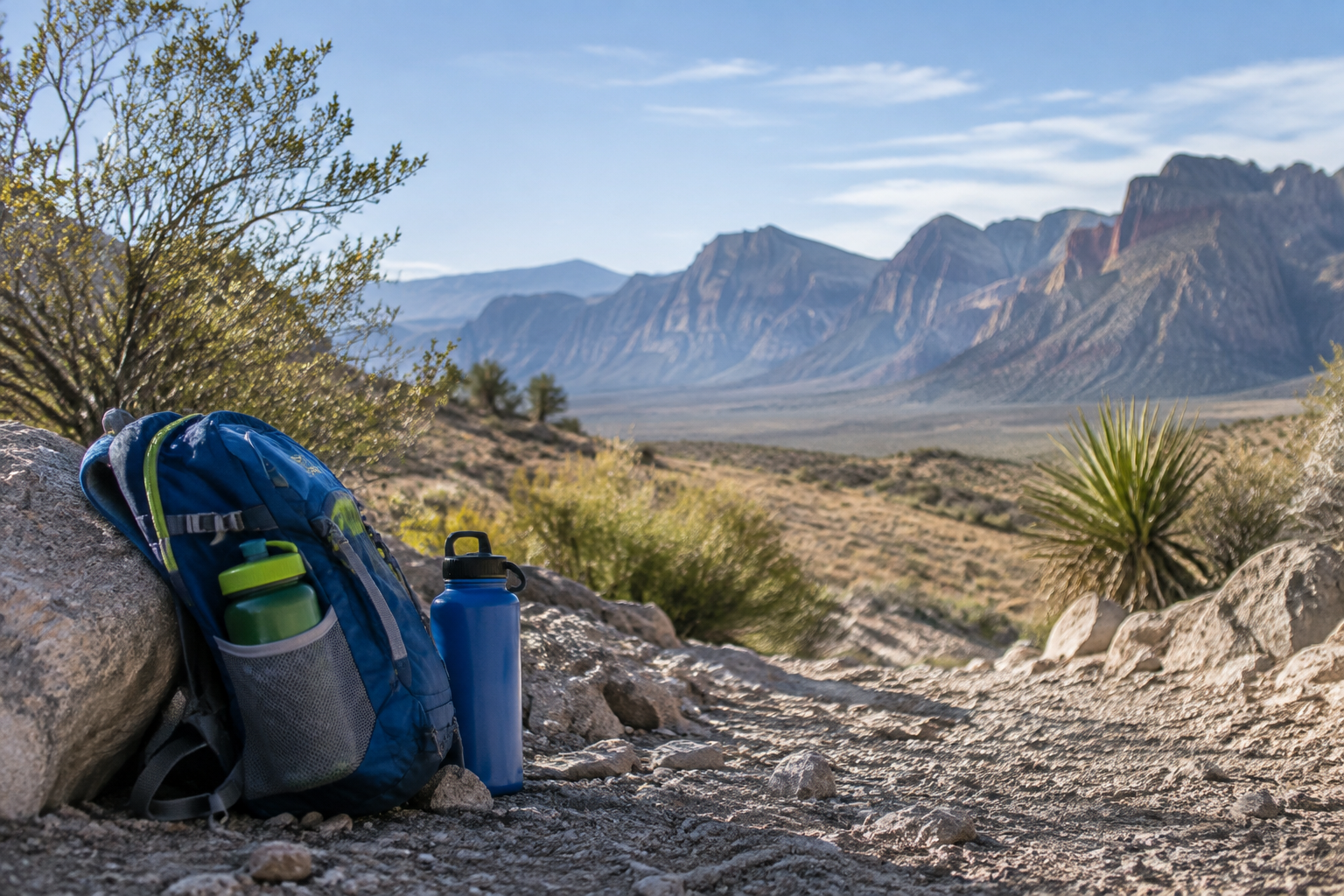
Check the forecast and official alerts shortly before departure. Carry appropriate supplies, including sufficient water, sun protection, and navigation information. Stay on designated routes, follow posted guidance, and set a turnaround point before anyone becomes exhausted. If heat, weather, or access restrictions make the plan unsuitable, choose an indoor alternative.
Plan travel time from door to door
There is no single useful drive-time estimate for “off the Strip.” Your starting point, chosen destination, departure time, and transport all matter. Check a current route estimate for the specific day and time you expect to travel, then allow for the parts a map does not handle for your family.
- Getting out the door: Include bathroom visits, gathering bags, and reaching your vehicle or pickup point.
- Arrival: Check parking information, drop-off arrangements, and the route to the entrance.
- Getting inside: Allow room for ticket checks or other entry procedures listed by the venue.
- The return: Check the journey back rather than assuming it will match the outbound trip.
As a planning rule, decide in advance how much travel your children can comfortably manage. If the journey feels disproportionate to the likely visit, choose something closer or make that destination your only major stop. For nature outings, confirm the exact entrance or trailhead before setting navigation.
If you are not driving, verify the transport option for both directions and make an appropriate child-restraint plan. Do not leave the return journey from an unfamiliar outdoor destination to chance.
Match the pace to your children’s ages
Babies and toddlers: Favor one simple outing with an easy exit. Check changing facilities, stroller access, and somewhere suitable to feed or rest. A successful day might end while everyone still has energy.
Preschoolers: Look for an activity they can understand immediately, with fewer transitions. Explain the basic sequence before leaving: play, lunch, then back to rest.
Elementary-age kids: Combine a focused activity with a chance to move. Give them one small responsibility, such as choosing which exhibit to visit first or helping check the packing list.
Tweens and teens: Let them influence the destination and pace. A subject-led museum visit or photography-focused outdoor stop may be more appealing than an outing labeled simply “for kids.”
For mixed ages, choose the main stop around shared interests and the most restrictive practical need. An older child can take on a deeper challenge, but a younger child cannot always manage a longer walk or quieter gallery.
Build a flexible day without surprise costs
Try one of three simple combinations: a museum and optional park stop, a park-centered day with a relaxed meal, or a nature outing followed by downtime. Keep the second activity optional, especially when the first involves advance booking.
Compare the total cost before deciding. Check official sources for admission, parking, reservations, and any separately ticketed experiences. Add transport and food to your own budget. Do not assume a park or outdoor destination is free to enter.
Save the official pages you need and recheck them before leaving. Having an indoor backup, a packed bag, and permission to shorten the day is often more useful than a minute-by-minute itinerary.
Frequently asked questions
What are good things to do in Vegas with kids away from casinos?
Consider standalone museums, public parks, and nearby nature outings. Choose by your children’s interests, the current conditions, and the actual journey from where you are staying. Confirm facilities and access through official sources.
How far should we travel for a family outing?
Use your children’s tolerance for travel as the limit, then check the specific route. Include parking, walking to the entrance, and the return journey. Avoid pairing two destinations simply because both appear close on a map.
Can we plan an off-Strip day without a car?
Only commit once you have verified suitable transport to and from your chosen destination. Check pickup arrangements, child-restraint needs, and the full cost. Choose another outing if the return trip is uncertain.
What should we check before an outdoor outing?
Review the forecast, official alerts, access requirements, route difficulty, and available facilities. Pack for the conditions and your children’s needs. Change plans if conditions are unsafe or the route is beyond anyone’s ability.
Should we book more than one attraction in a day?
One main booking is a sensible starting point. Leave the next stop flexible so you can respond to tiredness, hunger, or a visit that holds your children’s attention longer than expected.