
Chicago With Kids Without Packing Too Much Into One Day
Plan a calmer Chicago family day with one main attraction, a nearby free break and a neighborhood route that leaves room for snacks, transit and tired legs.
· 7 min read
The best things to do in Chicago with kids do not need to fill every hour: choose a museum, an outdoor outing or a family attraction, then pair it with a nearby free break and an easy meal. Keeping your plans in one neighborhood gives you more time to enjoy your main stop and less time moving tired children across the city.
Think of this as a planning framework rather than a checklist of sights. Build each day around your children’s interests, check the official details for your chosen attraction and leave enough space for the snack stop nobody saw coming.
Start with one main attraction, not three
A manageable Chicago day has one main stop, one easy break and one optional extra. The main stop is whatever your family most wants to do. The break gives everyone a chance to sit, eat or move freely. The extra happens only if there is energy left.
That might mean a museum followed by a picnic, or an outdoor outing followed by a short neighborhood walk. Avoid making the optional stop another prepaid commitment. Being able to skip it is what keeps the day flexible.
- Main stop: Choose the experience your children are most excited about.
- Free break: Identify a public outdoor space near the attraction before you leave.
- Optional extra: Keep it short, nearby and easy to abandon.
- Exit plan: Know how you will get back to your accommodation before everyone is exhausted.
Before booking, check the attraction’s official website for current admission, opening hours, reservation requirements and any age or height restrictions. Also look for stroller rules and reentry policies, which can change how you organize the outing.
A downtown outing: keep the Loop plan compact
For a downtown day, use the Loop as your planning area rather than treating all of central Chicago as one walkable stop. Pick your main attraction first, then map its actual entrance, a lunch option and a potential free break. A small cluster is more useful than a long list of places that look close on a citywide map.
A museum or another indoor attraction can be the focus here. Afterward, look for a nearby public plaza or park where children can pause without another admission ticket. Verify public access and any rules before promising a place to play.
A manageable pairing: One indoor attraction, lunch close to its exit and an unhurried outdoor pause. If everyone is still cheerful, add a short walk rather than another major attraction.
For transit, compare the entire journey, including the walk from your arrival stop. The simplest route may be worth more than a slightly shorter ride that requires a transfer.
A Lincoln Park-area outing: make room for outdoor time
If you are considering the Lincoln Park area, build the day around either an attraction or outdoor time, rather than trying to give both equal billing. Choose a destination that suits your children, then search the immediate surroundings for a free public space to unwind.
With younger children, the break may be the most important part of the plan. After following indoor rules, they may need time to move at their own pace. Check the location of any playground or open space you are considering, along with access information and available facilities.
A manageable pairing: Your chosen attraction followed by a picnic or play break nearby. Bring something simple to eat so lunch does not depend on finding a table at exactly the right moment.
Plan the return trip from where your outing will finish, not just from where it begins. If your outdoor break takes you farther from your arrival point, retracing those steps may be the hardest part of the day.
A Hyde Park outing: give one neighborhood its own day
If a museum or other attraction in Hyde Park is on your wish list, let it be the focus of that day. Avoid automatically adding a downtown attraction afterward. Two appealing stops can become an exhausting itinerary when you add meals, entrance procedures and travel between them.
Look for a nearby free public outdoor break that fits the route you are already taking. It does not need to be a destination in its own right. A comfortable place to sit and share snacks can be enough after a busy visit.
A manageable pairing: One substantial attraction, an outdoor pause if conditions allow and a meal before heading back. Keep any neighborhood exploring optional.
Check both directions of your transit journey in advance. For families with naps or an early bedtime to consider, the return trip should help determine when you leave the attraction, rather than becoming an afterthought.
A waterfront outing: choose one stretch
For a waterfront-focused Chicago day, choose one manageable section rather than trying to cover every view you have saved. Decide whether the outing is mainly a walk or includes a ticketed activity. If you book an activity, let that be your main stop.
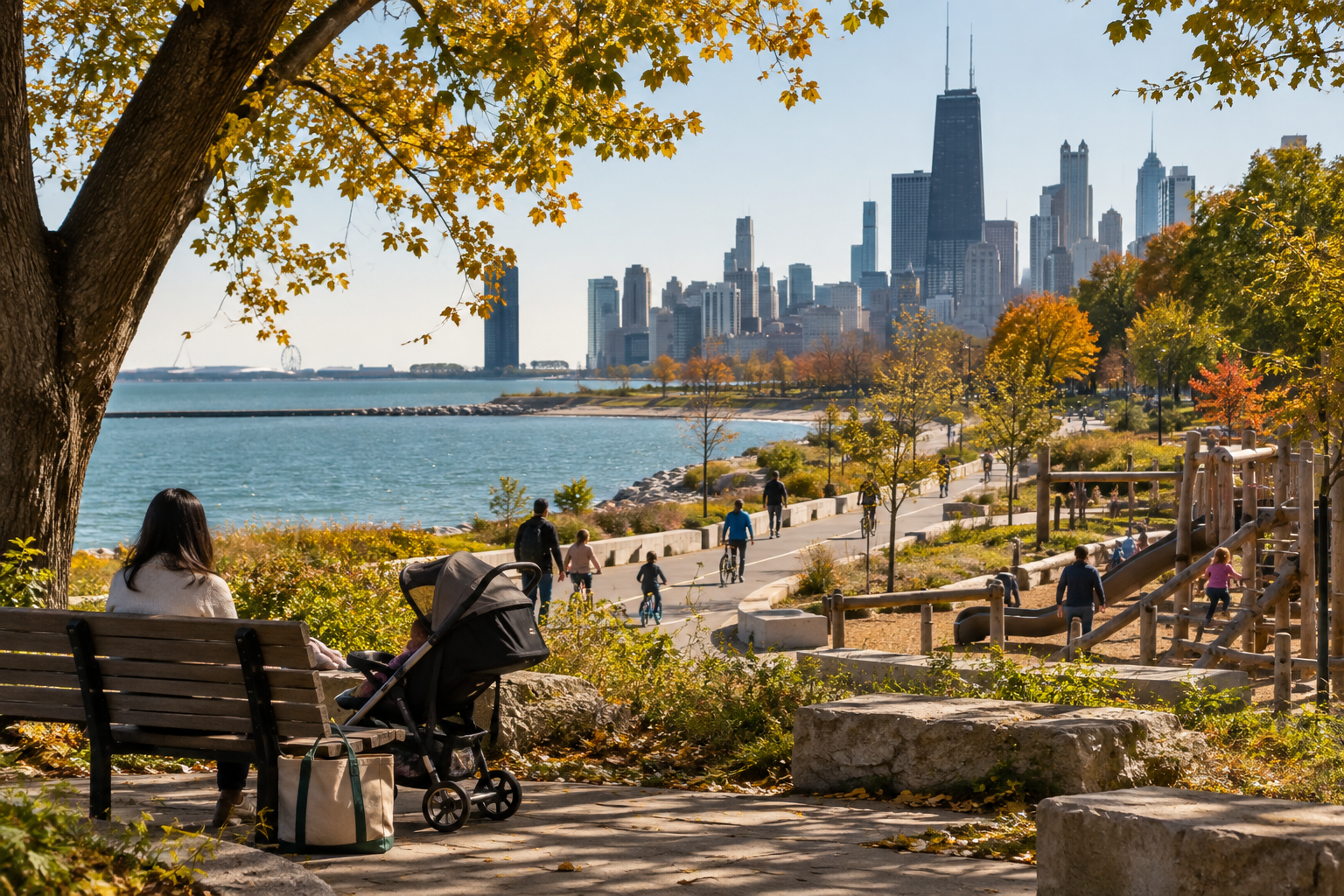
Research a nearby public-access place for a free pause, checking the route and current conditions before setting off. Keep children close around water and agree on boundaries before they start exploring.
A manageable pairing: One waterfront activity or short walk, followed by snacks and a seated break. Set a turnaround point while everyone still has energy, rather than waiting until someone refuses to walk farther.
For a summer visit, pack sun protection and water, and consider what you will do if the weather becomes uncomfortable. An indoor backup should replace the outdoor plan, not create another obligation.
Use transit to simplify the day
Choose transportation after grouping your stops. Starting with a scattered itinerary and hoping transit will solve it usually adds decisions you do not need.
Compare walking, public transit and any other transportation your family uses by the whole journey. Include getting to the stop, waiting, transferring and reaching the attraction’s entrance. Check official transit information for current routes, fares, service changes and accessibility details.
- With a stroller: Verify station accessibility and your attraction’s stroller policy.
- With toddlers: Favor fewer transitions when choosing between routes.
- With older kids: Let them help follow the route, while an adult handles navigation decisions.
- If driving: Check parking arrangements and costs before committing to a destination.
Avoid a tight booking immediately after a journey with several moving parts. Some breathing room at arrival is more useful than squeezing in one extra stop.
Plan free breaks as carefully as paid stops
A free break works best when it is genuinely nearby. If reaching it involves a long detour, it may not offer much relief. Check a map for the actual walking route, then confirm public access through an official source where possible.
Match the break to the children you have with you. A toddler may need movement; an older child may prefer a quiet seat and a snack. After an outdoor outing, everyone may simply want shelter.
Do not assume an outdoor space has restrooms, drinking water, shade or seating. Verify the facilities that matter to your family, and handle restroom stops before leaving your main attraction when practical.
Keep the day bag focused: water, snacks, weather protection and whatever your child needs for comfort. Carrying supplies for several hypothetical outings can make the real outing harder.
Frequently asked questions
What are the best things to do in Chicago with kids?
Start with your children’s interests: a museum for curious explorers, an outdoor outing for children who need movement or a family attraction they have specifically requested. Choose one main experience and add a nearby free break instead of trying to cover the city in a day.
How many attractions should we plan for one day?
One major attraction is a sensible starting point. Leave a second, smaller activity optional. Your children’s ages, the travel involved and how long they enjoy staying in one place matter more than the number of stops.
Can we plan a Chicago family day on a budget?
Keep paid activities selective, research free public spaces nearby and bring snacks or a picnic where permitted. Check official attraction websites for current prices and any admission offers, including eligibility and reservation requirements. Do not assume children enter free.
What should we do if it rains?
Replace your outdoor plan with an indoor attraction in the same area, subject to availability. Check booking requirements before traveling. If you already have an indoor main stop, shortening the day may work better than adding another attraction.
What is the easiest way to avoid overtired kids?
Stay within a compact area, eat before everyone is ravenous and take a break before fatigue becomes a meltdown. Know your route back and give yourself permission to leave while the day still feels like a success.