
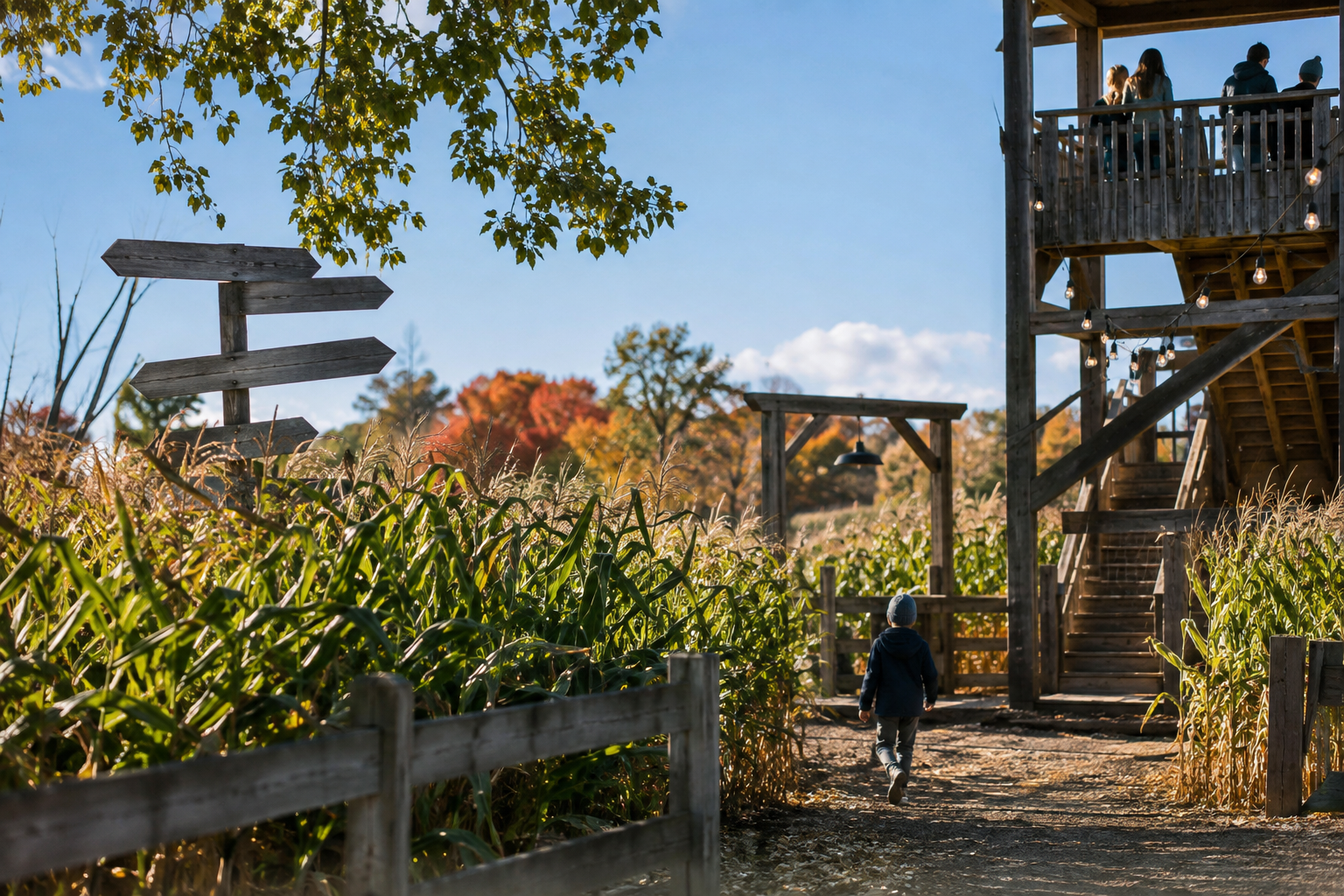
New Salem Corn Maze With Kids: Choosing the Right Visit for Your Family
Planning a New Salem Corn Maze outing? Here’s how to compare daytime and evening options with your children’s ages, energy levels, and comfort with scares in mind.
· 5 min read
Planning a New Salem Corn Maze visit with kids? Start by checking the current daytime and evening offerings, then choose around your youngest or most scare-sensitive child. For this Michigan outing, the key question is not simply whether your children enjoy Halloween. It is whether the specific experience involves darkness, surprises, or scares they actually want to encounter.
Current attraction details are not confirmed here, so use this guide to decide what suits your family, then verify available experiences, age guidance, and booking details on the attraction’s official website.
Choose the experience before choosing the time
A daytime visit and an evening visit can feel very different to a child, even when both involve finding a route through corn. Daylight makes it easier to see companions and surroundings. Darkness can add uncertainty, especially for kids who dislike losing sight of an exit.
However, daytime does not automatically mean scare-free, and evening does not automatically mean haunted. Read the description of each currently advertised experience rather than relying on the time slot or a seasonal photograph.
Before booking, establish:
- Whether the experience is explicitly described as non-scary or includes intentional scares.
- Whether any age restrictions or recommendations apply.
- Whether actors, startling sounds, flashing lights, or other effects are involved.
- Whether the ticket includes only your chosen activity or additional experiences.
When a daytime outing may be the better fit
If a daytime, non-scary option is available, it is a sensible starting point for children who are new to mazes, uncertain about Halloween characters, or happiest exploring when they can see clearly. Confirm the non-scary part directly rather than assuming it.
For toddlers and preschoolers, consider the practical side before the puzzle. Can they manage the walking? Will the visit overlap with a nap or meal? Check terrain and stroller suitability with the attraction, and do not assume a maze path will work for every stroller or mobility device.
For elementary-age children, a daytime maze can become a shared navigation challenge. Let them choose turns, spot landmarks, or take turns leading. Keep the goal flexible: enjoying time together matters more than completing every section.
If one child is nervous, describe getting turned around as part of the activity rather than a mistake. Avoid promising an easy exit unless you have confirmed how leaving the experience works.
How to think about an evening visit
An evening outing may appeal to older children who enjoy a more atmospheric adventure. But enjoying spooky movies at home is not the same as enjoying an unfamiliar outdoor space after dark. Ask about darkness and live surprises separately.
If an evening experience is currently offered, check whether it is non-haunted, intentionally frightening, or a combination of separately ticketed activities. Do not assume that booking the maze means opting into, or avoiding, any other attraction.
Ask what lighting is provided and whether personal flashlights are allowed. Also check the expected time commitment against your child’s usual bedtime. A willing child can become overwhelmed when tired, cold, or hungry.
Make participation a genuine choice. “You can tell me you want to stop” is more helpful than “You’re old enough now.” Confirm the exit procedure with staff before entering anything that might feel intense.
Match the plan to temperament, not just age
Age guidance from the attraction should always inform your decision, but siblings of similar ages can have very different limits. A thrill-seeking younger child still needs to meet any restrictions, while a cautious teenager deserves a pressure-free alternative.
- For younger children: Prioritize a clearly described, non-scary experience and a manageable amount of walking.
- For school-age kids: Ask whether their worry is getting lost, darkness, costumes, loud noises, or being startled.
- For tweens and teens: Discuss the advertised scare elements honestly, without treating bravery as a requirement.
- For sensory-sensitive children: Seek specific information about sound, lighting, crowd conditions, and unexpected interactions.
For mixed-age families, consider separate activities only if suitable options are available and each group has appropriate adult supervision. Otherwise, choose the experience everyone can comfortably share.
Check the practical details before leaving home
Use the official website for current operating dates, opening hours, ticket prices, and booking requirements. Check again before traveling for any weather-related changes. Seasonal information from an old review or social post may not describe the current visit.
Beyond admission, confirm restroom access, parking arrangements, accessibility, food availability, and rules on bringing snacks or drinks. Ask about reentry and whether leaving an activity early affects your ticket.
Dress for the forecast and wear comfortable, closed-toe shoes suitable for outdoor walking. Bring layers as appropriate and explain the family plan before arrival: stay together, agree on who leads, and speak up when someone needs a break.
Frequently asked questions
Is New Salem Corn Maze suitable for young children?
That depends on the current experience and your child’s comfort level. Check official age guidance and look for an explicitly non-scary option rather than assuming all maze activities suit young children.
Is an evening visit necessarily scary?
No, darkness and intentional scares are different things. Verify the description of the specific evening offering, including whether it involves performers or startling effects, before deciding.
Where should I check tickets and opening hours?
Check the attraction’s official website for current prices, dates, hours, and ticket inclusions. Confirm that your chosen admission covers the experience your family wants.
What if my child changes their mind?
Take their concern seriously and avoid pressuring them to continue. Ask staff about exit arrangements before starting, and make it clear that changing the plan is acceptable.