


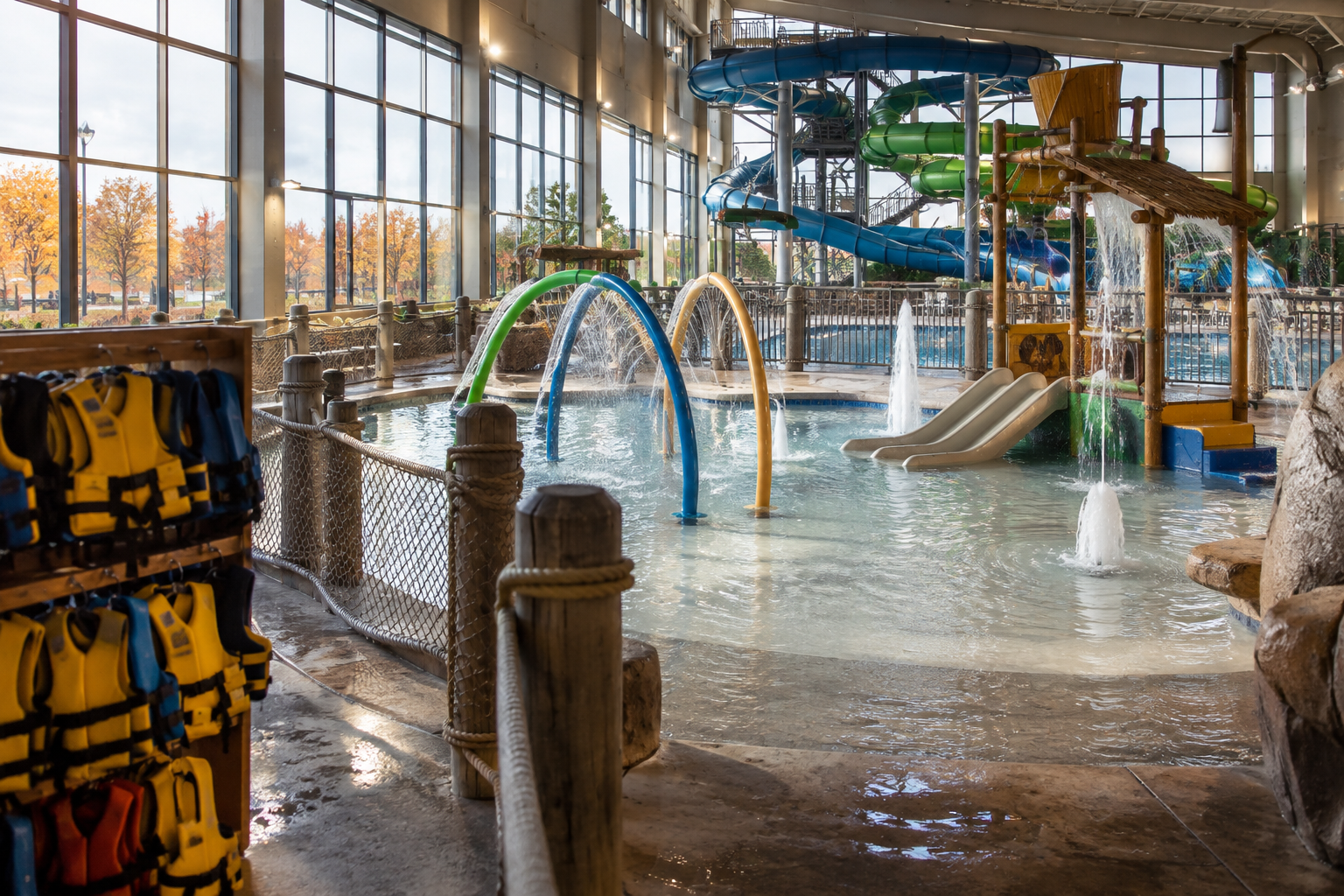
Indoor Water Parks Across the US: How to Choose a Family Day Trip
Compare standalone indoor water parks by swimming ability, height rules, toddler spaces, and day-use access to find a better fit for your family.
· 7 min read
The best indoor water park for your family is a standalone park that welcomes day visitors and has enough activities your children can safely enjoy at their current heights and swimming abilities. If you're searching for the best water parks for families 2025, start with those practical checks, not the biggest slide in the photos. This guide focuses on choosing a US day trip without a hotel stay, excluding resort properties.
For a fall outing, an indoor swim day can be an appealing alternative to weather-dependent plans. But being under a roof doesn't make every park equally suitable. Before booking, compare the water spaces, participation rules, supervision needs, and full cost of getting everyone through the door.
Start with standalone parks and clear day-use access
For this guide, standalone means a water park that isn't part of a resort property. A resort selling day passes still falls outside that scope. When searching, look for an official page that clearly describes the facility and its admission options rather than relying on a booking site's category label.
Confirm that the ticket you want covers indoor water park access on your intended date. Don't assume general facility admission includes every water attraction or that a pass allows an unrestricted visit.
- Can you buy admission without reserving accommodation?
- Does the ticket cover the indoor water areas you want?
- Is admission tied to a date, arrival time, or session?
- Do accompanying adults and nonswimmers need tickets?
- What happens if your plans change?
If an official page leaves any of those questions unanswered, contact the park before paying. Unclear access terms are a good reason to pause, especially when your trip involves a long drive.
Compare attractions by swimming ability first
Age is a useful starting point, but it doesn't tell you how a child will manage moving water, splashes, or an unfamiliar pool. Think about what each child can comfortably do today, not what they managed once during a lesson.
For a nonswimmer, prioritize clearly described shallow play spaces and supervision rules you can realistically follow. For a developing swimmer, investigate water depth, entry and exit points, and whether an attraction involves currents or a deeper landing area. Confident swimmers still need to meet every posted participation requirement.
Read attraction descriptions individually. A gentle-looking ride may have rules that make it unsuitable for your child, while a less dramatic play area may provide plenty to enjoy.
- Nonswimmers: Look for suitable shallow-water choices, clear caregiver requirements, and information about permitted flotation devices.
- Developing swimmers: Check depths, any swim-test requirements, and how riders enter and leave the water.
- Confident swimmers: Compare eligible attractions, but keep height, rider, and supervision rules in the decision.
Follow the park's life jacket policy and ask whether suitable sizes are available or whether you may bring your own approved jacket. A flotation device does not replace close adult supervision, and lifeguards do not replace your family's supervising adult.
Read height restrictions before promising a slide
A child's wish list and their eligible ride list may be very different. Measure each child before comparing parks, then check the official restrictions for every attraction that matters to them. Explain that staff will apply the park's measurement rules on arrival.
Height eligibility isn't the same as swimming readiness. A child may meet a height minimum but still feel uncomfortable with the ride experience. Equally, a strong swimmer who is below the minimum still cannot use an attraction that requires it.
Check for requirements beyond minimum height, including maximum height, rider weight, number of riders, and whether an adult must accompany a child. Don't assume riding with a parent overrides a restriction.
A useful comparison is the number of appealing activities each child can actually use. If one sibling qualifies for nearly everything and another has only one suitable space, decide whether splitting up is practical before you book.
Look closely at toddler play areas
A toddler zone deserves more scrutiny than a colorful photo. Look for official information about water depth, the layout, permitted ages or heights, and adult access. Ask about anything that would determine whether your youngest child can enjoy the space.
Consider your child's sensory preferences, too. Would surprise sprays or tipping water upset them? Do they prefer sitting at the water's edge, exploring small play features, or holding an adult's hand? Seek a description that matches those needs rather than treating all children's areas as interchangeable.
- Can a caregiver stay within arm's reach throughout play?
- Are there boundaries separating toddler play from deeper water?
- Can adults easily see the area's entry and exit points?
- What are the swim-diaper and bathroom-break rules?
- Are changing facilities suitable for your child?
Check whether the toddler area will be available during your visit. If it's the main reason for choosing a park, its closure would change the value of the entire outing.
Match the layout to your supervision plan
The best choice for siblings isn't necessarily the park with the most attractions. It's the one where the adults can safely manage the activities everyone wants to do.
Picture the visit before booking: one child wants a slide, another needs hands-on support in shallow water, and someone needs the bathroom. Who stays with whom? If you're the only adult, choose activities that let your group remain together while meeting the park's rules.
When two adults share supervision, make handoffs explicit. Agree on who is actively watching each child rather than assuming the other person has taken over. Keep phones and other distractions out of active supervision.
For accessibility needs, ask specific questions about pool entry, changing facilities, mobility-device access, and attraction transfers. A general accessibility statement may not answer what your family needs to know.
Compare the whole day-trip cost
Without a confirmed visit date and ticket selection, a headline admission price tells only part of the story. Use the official checkout information to compare the total for your actual group, including adults who don't plan to swim.
Check whether parking, lockers, towels, or other essentials involve additional charges. Read the food and drink policy before assuming you can bring lunch. If you need to leave during the day, confirm the reentry rules.
Judge value by usable time and suitable activities, not attraction count. A lower total isn't necessarily better if most of the advertised fun is off-limits to your children. Likewise, extras aren't worthwhile unless they solve a real need for your group.
Include the drive in your decision. Think about changing time, meals, naps, and the journey home, not just time in the water. A manageable outing can be a better choice than an ambitious trip that leaves everyone exhausted.
Make a shortlist using the same questions
Compare each candidate against one simple checklist. Mark an unanswered question as unknown rather than filling the gap with an assumption.
- Access: Standalone property with confirmed day-use admission.
- Swim fit: Suitable water spaces for every child's ability.
- Ride fit: Enough appealing attractions within each child's restrictions.
- Toddler fit: Appropriate play space and workable caregiver access, if needed.
- Family logistics: A supervision plan, suitable facilities, and a manageable drive.
- Booking confidence: Clear total cost, ticket terms, and official operating information.
Before leaving, revisit the official site for your date's opening information and any attraction notices. Keep your plans flexible enough that one unavailable feature doesn't undo the day.
Frequently asked questions
What makes an indoor water park good for families?
A strong fit combines suitable activities for every child's swimming ability and height with clear admission rules and manageable supervision. The most impressive slide collection isn't automatically the best choice for your group.
Can you visit without staying at a hotel?
For this guide, look only at standalone, non-resort properties and confirm their day-use ticket options. Don't assume a search result labeled “indoor water park” meets both requirements.
Are indoor water parks suitable for nonswimmers?
That depends on the facility's attractions and rules. Check shallow-water options, caregiver requirements, and life jacket policies. Stay within your child's abilities and provide close, active supervision.
What if my children qualify for different attractions?
Look for enough shared activities to make the visit worthwhile. Splitting up only works when you have enough adults to meet supervision requirements and support each child safely.
Where should I check hours and ticket prices?
Use the park's official website and booking page for your intended date. Confirm what admission includes, any session limits, additional costs, and change or cancellation terms before purchasing.